
Describe the app. Then hand it the boring steps.
Two different jobs, both real. One builds the thing, once. The other runs inside it every day, on the steps that never needed a person.
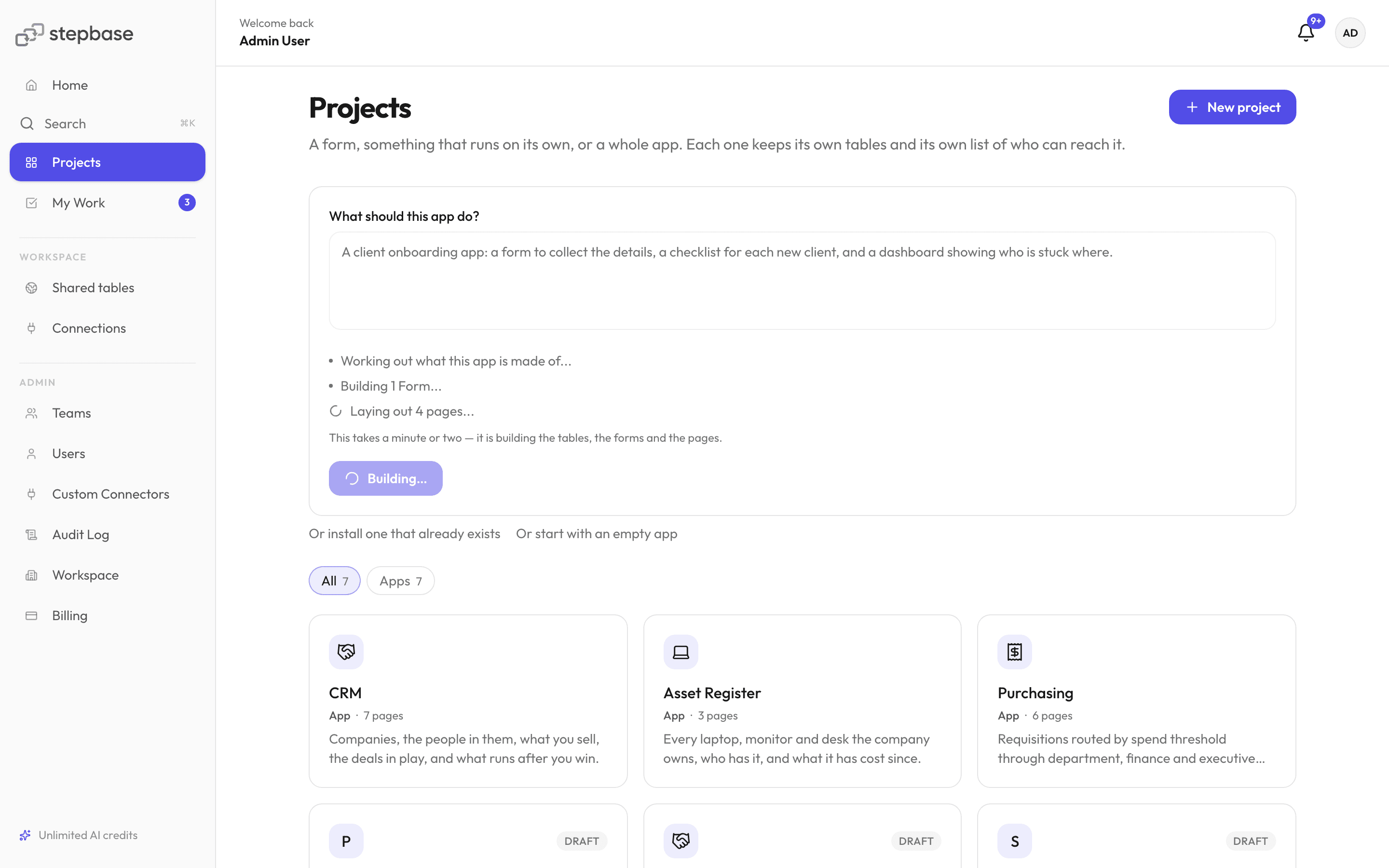
- A sentence becomes an app
- Tables with sensible columns, the pages over them, the form that fills them, and the approval behind it. Everything it produces is ordinary product you can open and edit — not a black box you have to accept whole.
- Or just the part you are missing
- Generate one Flow, one form or one page into an app you already have, and keep the rest exactly as it is.
- AI takes a Step, not the process
- An AI assignment is one option among many, chosen per Step. Every other Step stays a person's unless you say otherwise.
- It hands off when it is unsure
- The model rates its own confidence on every call. Below the mark you set — or if the call fails — the Step goes to the person or team you nominated, as an ordinary task.
- It reads only what you allow
- You scope which fields the model sees. Every AI decision lands in the audit trail with its confidence, its reasoning and the model that made it.
Templates that use it
- FormCategorize FeedbackAI files each piece of feedback as a bug, a feature request, a question or praise, and hands it to a person when it is not sure. The submitter sees one "Completed" status either way.
- AppAdmissionsApplications screened by the office that owns the programme, scored by every reviewer against one rubric, and decided by the director, on a board and a dashboard the whole office reads.
What it does not do
- AI never publishes anything on its own. What it generates arrives as a draft you review, edit and publish.
- AI calls are metered per plan. A step that cannot call the model escalates to its named human rather than guessing.